Commodore 65
The Commodore 64 successor that never made it to market
Commodore 65: the C64 successor that never shipped
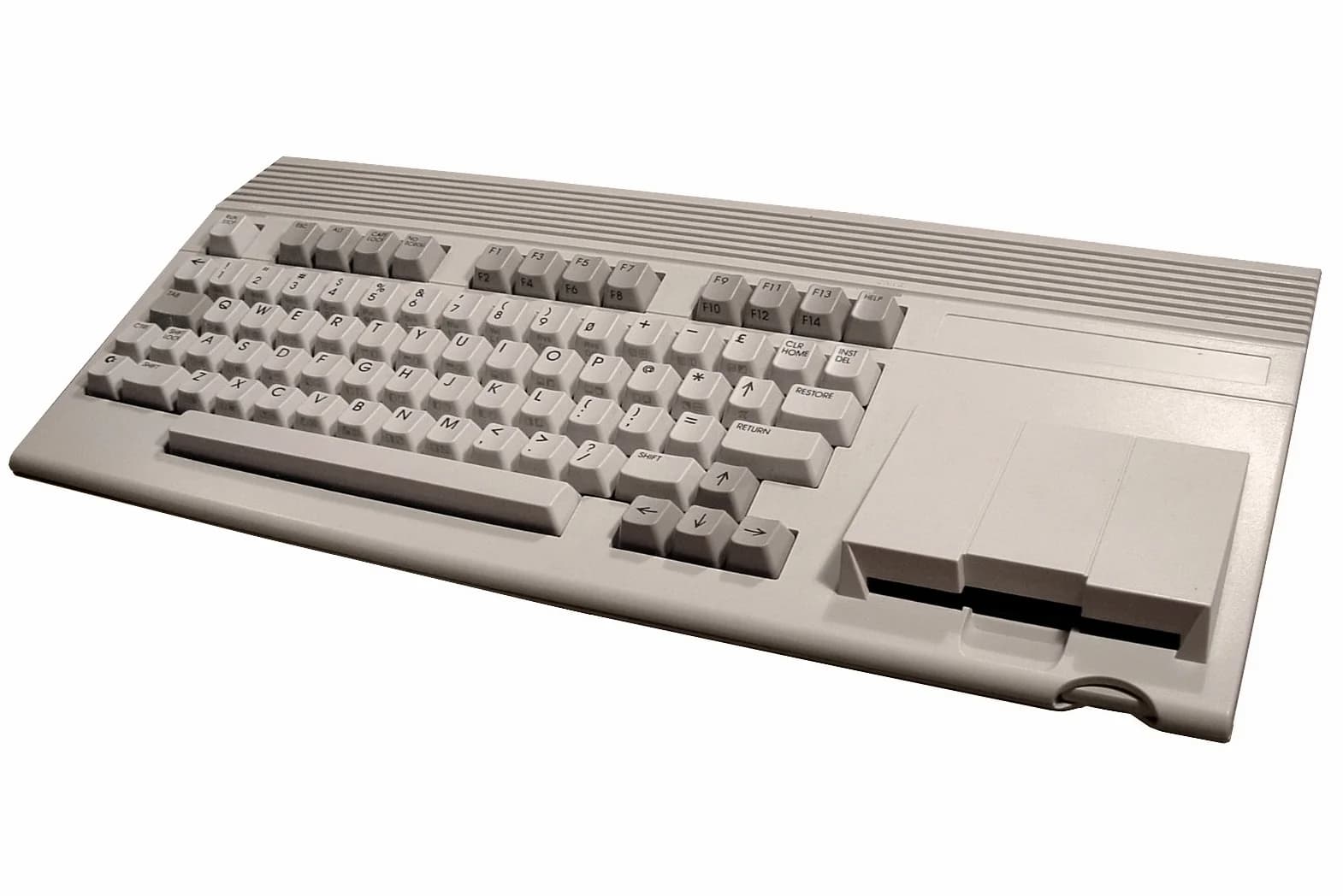
The Commodore 65 is one of the most fascinating machines in computing history. Developed in 1990 and 1991, it promised more colours, a faster processor and a built-in floppy drive. It was cancelled before it ever reached a shop shelf.
Only a small number of prototypes were built for internal testing. When Commodore went bankrupt in 1994, those units found their way into the hands of collectors. Today a Commodore 65 prototype is among the most sought-after items in the Commodore 64 history collector market.
Shop on Amazon
Find Commodore hardware, games, books and accessories. Browse the full range on Amazon.
What is the Commodore 65?
The Commodore 65, also referred to as the C65 or C64DX, was developed at Commodore's engineering facility in West Chester, Pennsylvania. The project started around 1989 as an attempt to create a modern 8-bit computer that could compete at the lower end of the market while remaining backward compatible with the enormous C64 software library.
The machine was designed to run C64 software in a compatibility mode, meaning the millions of C64 games and applications already on the market would still work. At the same time, the new hardware offered dramatically improved capabilities for software written specifically for the C65.
The project was cancelled in 1991, before the C65 reached production. Commodore's management had decided to concentrate resources on the Amiga range, which was positioned at a higher price point and offered better margins.
A small number of pre-production prototypes were built for internal testing. These units survived Commodore's bankruptcy in 1994 and are now in the hands of collectors worldwide. The C65's design documents later became the foundation for the MEGA65 project.
The hardware in detail
CSG 4510 processor at 3.54 MHz
The heart of the C65 is the CSG 4510 R3, a custom chip combining a 65C02 CPU core with a DMA controller. Running at 3.54 MHz, it is more than three times faster than the original C64. A built-in compatibility mode slows the processor to 1 MHz, allowing most C64 software to run as if it were on real C64 hardware.
VIC-III graphics: 256 colours
The VIC-III chip is a major step forward from the VIC-II that powered the C64. It supports 256 simultaneous colours from a palette of 4096 and resolutions up to 1280 by 400 pixels. New graphics modes allow for more detailed sprites and backgrounds. In C64 mode the VIC-III behaves like a VIC-II so that existing software displays correctly.
Dual SID chips for stereo sound
Where the C64 had a single SID chip, the C65 has two. Both chips can be addressed independently, giving six oscillators, two filters and full stereo output. The SID chip was already celebrated for its music capabilities on the original machine. The C65 builds dual SID in as standard.
Built-in 3.5-inch floppy drive
One of the most visible improvements over the C64 is the built-in 3.5-inch double-density floppy drive. The C64's external 1541 disk drive was notoriously slow. The C65's built-in drive uses a much faster protocol and its own integrated controller, loading programmes significantly more quickly.
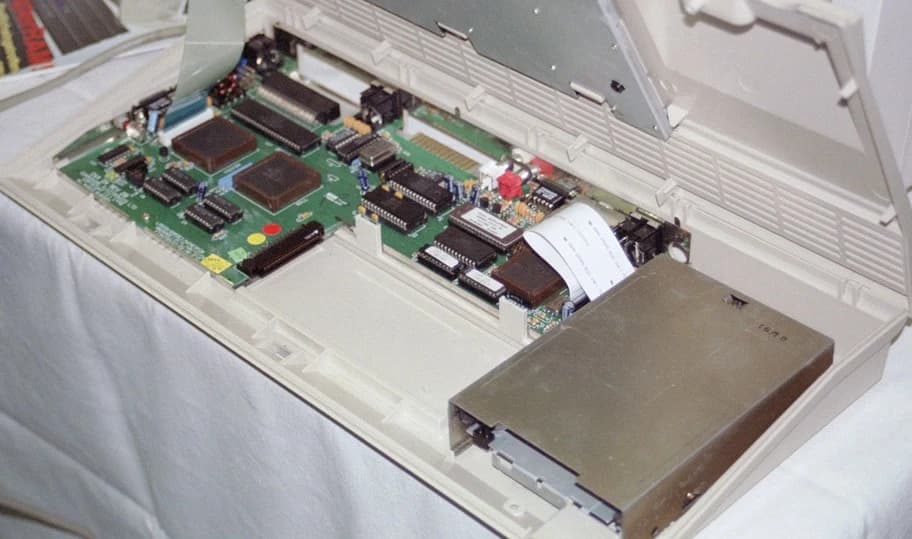
Inside the Commodore 65
The PCB of the Commodore 65 prototype reveals the custom chips that made it so promising. The CSG 4510 processor and the VIC-III graphics chip are clearly visible, along with the dual SID chips that gave the C65 its stereo sound capability.
The layout differs significantly from the C64 mainboard. Commodore's engineers designed the C65 as a clean-sheet machine, not a modified C64. The integration of the floppy drive controller and the DMA logic into the main board reflects the ambition of the project. The MEGA65 team studied boards like this one to recreate the design faithfully in FPGA.
C64 compatibility
Backward compatibility with the Commodore 64 was a central design goal for the C65. The machine includes a dedicated C64 mode that slows the processor to 1 MHz, adjusts the video timing and routes audio through a single SID channel. Most C64 software runs correctly in this mode.
However, the compatibility layer was never fully polished, as the project was cancelled before the team could complete it. Some programmes that rely on cycle-exact timing, illegal CPU opcodes or direct hardware tricks do not work correctly.
In native C65 mode the machine uses its full hardware capabilities and BASIC 10.0 commands. Switching to C64 mode requires a specific BASIC command or a hardware reset with the appropriate startup option.
The Commodore 65 in action
Technical specifications
| CPU | CSG 4510 R3 (65C02 core) at 3.54 MHz |
| C64 mode speed | 1 MHz (hardware compatibility mode) |
| Graphics | VIC-III chip |
| Colours | 256 simultaneous from a palette of 4096 |
| Resolution | Up to 1280 x 400 pixels |
| RAM | 128 KB (expandable to 1 MB) |
| ROM | 128 KB |
| Sound | 2 x SID 6581/8580 (stereo) |
| Storage | Built-in 3.5-inch double-density floppy |
| Keyboard | 77 keys with numeric keypad |
| Ports | 2 x joystick, serial, user port, cartridge, composite, RGBI |
| Operating system | Commodore BASIC 10.0 |
| Dimensions | Approx. 46 x 20 x 5.1 cm |
| Developed | 1990 to 1991 |
| Status | Prototype only, never officially released |
| Prototypes | Estimated 50 to 200 surviving units |
| Manufacturer | Commodore Business Machines |
Why was the Commodore 65 cancelled?
Amiga took priority
By 1991 the Amiga had become Commodore's main focus. Management saw a new 8-bit machine as a distraction rather than an opportunity.
Production costs too high
The CSG 4510 and VIC-III were custom chips. Producing them for a machine that had to compete on price with low-cost C64 clones was difficult to justify.
Internal disagreements
There was uncertainty at Commodore about whether the C65 should be positioned as a games machine or a home computer. This affected development priorities.
Project never reached finished state
The C65 was cancelled before engineering could complete the C64 compatibility layer or finalise the hardware. The engineering team was reassigned to other projects.
Commodore 65 prototypes as collector items
After Commodore's bankruptcy in 1994, the assets of the company were auctioned off. The pre-production C65 units, stored at the West Chester facility, were sold along with other surplus stock. Some found their way to individual collectors, others to retro computing enthusiasts who recognised their significance.
The exact number of surviving prototypes is unknown. Estimates range from around 50 to as many as 200 units. The machines vary in their hardware revisions and completeness. Some have the CSG 4510 R3 processor, others earlier revisions. Condition varies significantly between units.
Working C65 prototypes in good condition are among the most expensive items in the retro Commodore collector market. Units with documentation and original packaging have sold for several thousand euros at auction. Even non-working examples typically attract strong interest.
The collector community has done important preservation work. ROM dumps, schematics and technical documentation have been shared publicly, and this material formed the foundation for the MEGA65 project.
The MEGA65: completing the C65 vision
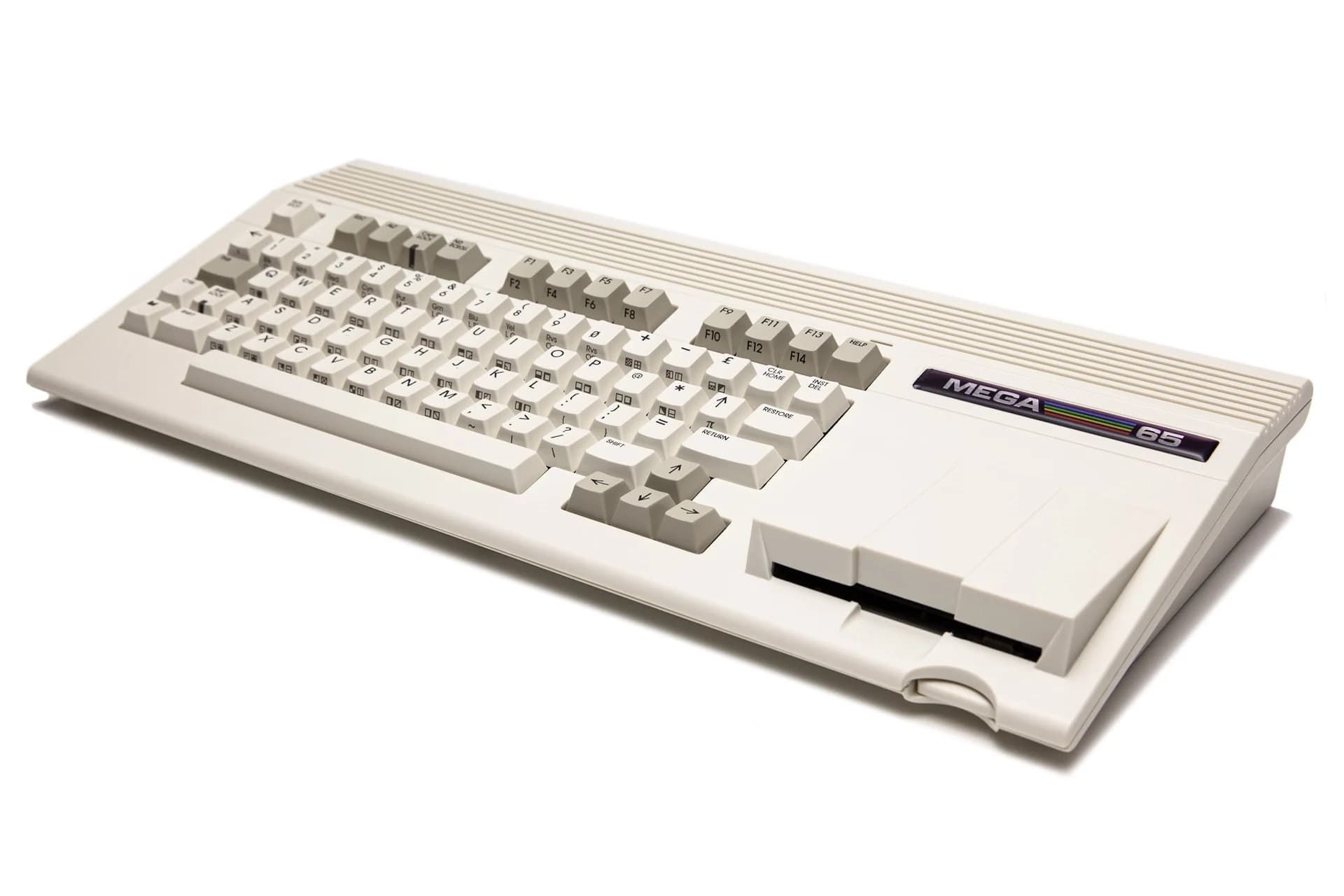
The MEGA65 is the machine that the C65 was always meant to be. Built using FPGA technology and based on the original Commodore 65 design documents, it runs BASIC 10.0, supports dual SID stereo audio and is backward compatible with C64 software.
The MEGA65 project is open-source and community-driven. Developers have spent years studying the original C65 schematics, correcting bugs and adding features that were planned but never implemented. The result is both historically faithful and practically useful.
If the Commodore 65 represents what might have been, the MEGA65 represents what can still be. It is the closest thing available to owning a real C65, without paying thousands of euros for a prototype of uncertain reliability.
Frequently asked questions
**** FREQUENTLY ASKED QUESTIONS ****
READY.
Explore more C64 history
The Commodore 65 is part of the larger story of the Commodore 64. Discover the history behind the machine, all C64 models and the modern projects keeping it alive.
C64 history▶