MEGA65
The open-source FPGA computer based on the never-released Commodore 65
MEGA65: the computer Commodore never released
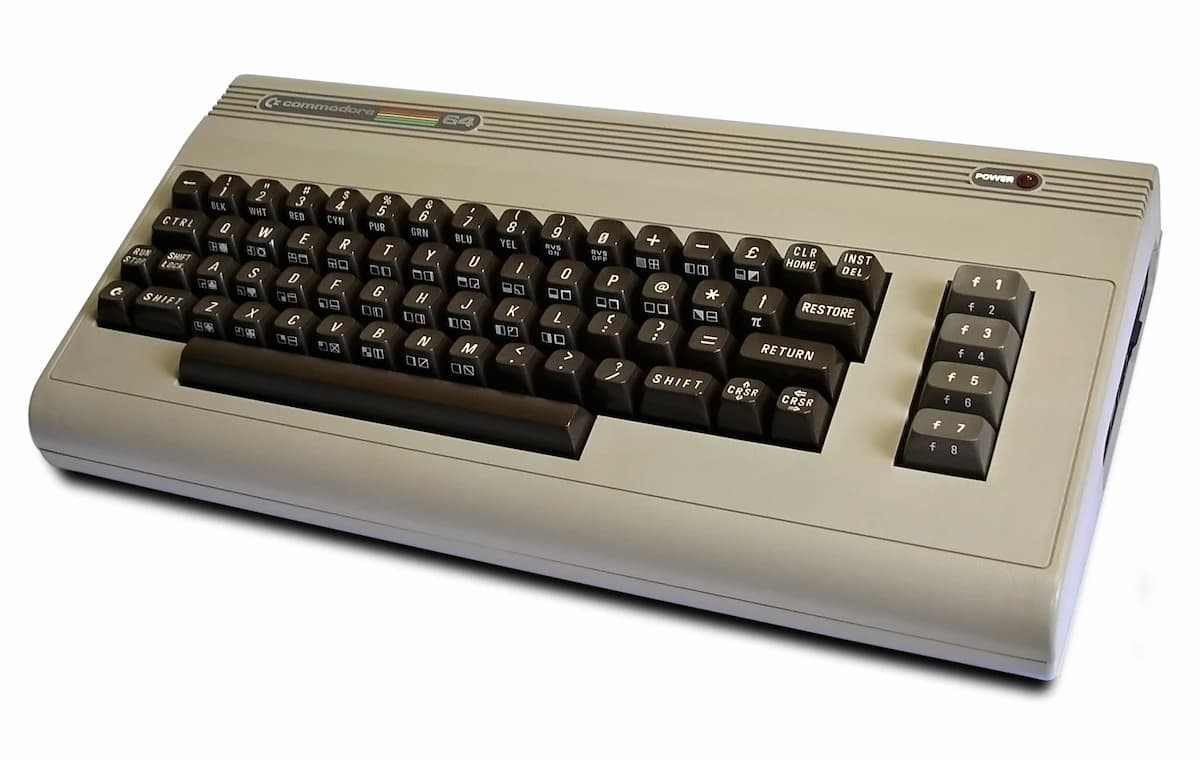
The MEGA65 is a modern, open-source 8-bit computer based on the Commodore 65, the successor to the C64 that Commodore built in the late 1980s but never sold to the public.
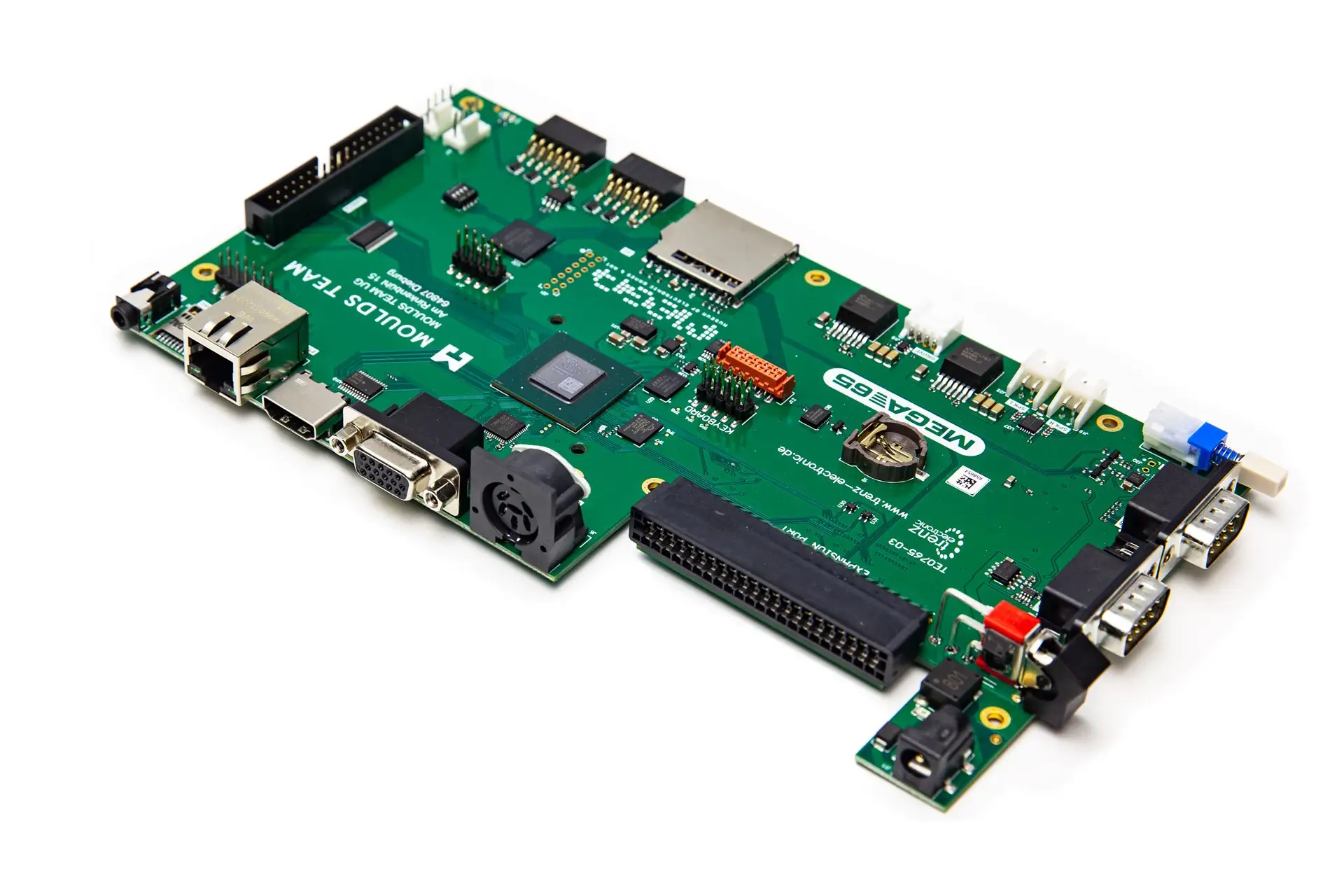
Developed since 2015 by a community of volunteers, the MEGA65 brings the Commodore 65 design to life with modern improvements: a Xilinx Artix-7 FPGA, a Cherry MX mechanical keyboard, HDMI and VGA output, SD-card storage, Ethernet, and full C64 compatibility. It boots directly into BASIC65, just like the original Commodore 64 boots into BASIC 2.0.
Visit mega65.org▶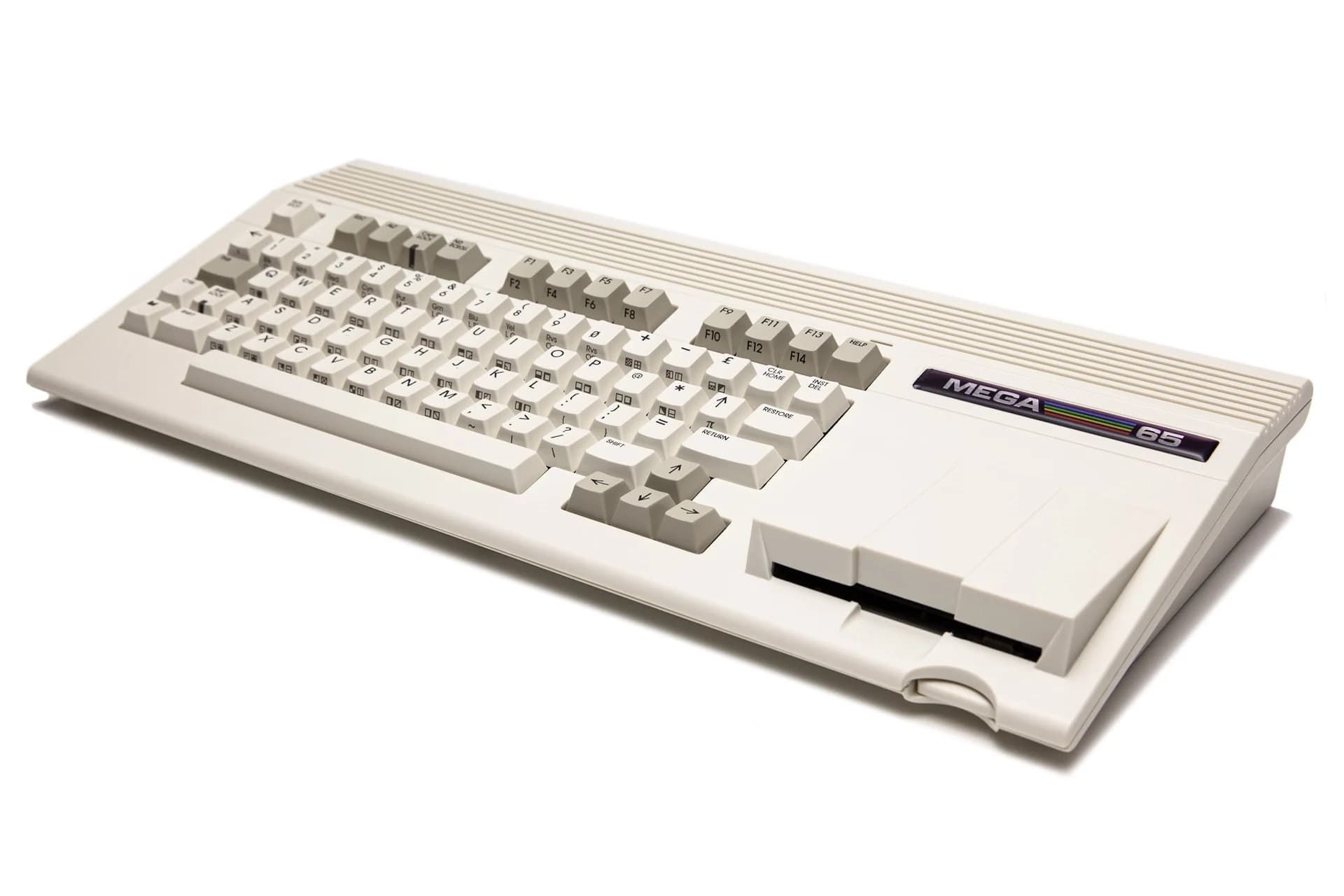
Shop on Amazon
Find Commodore hardware, games, books and accessories. Browse the full range on Amazon.
The Commodore 65 that never was
The Commodore 65 was developed internally at Commodore in the late 1980s as a next-generation successor to the Commodore 64. It was more powerful, backwards compatible and ready for the next decade of home computing. But Commodore cancelled it before it ever reached the shops. Only a small number of prototype units survived.
The MEGA65 project started in 2015 with a simple question: what would the Commodore 65 have become if it had been finished and sold? The answer is the MEGA65, a machine that takes the original C65 design as its starting point and builds it out with the hardware improvements that were always intended but never completed.
The result is a fully functional 8-bit computer that feels like a natural continuation of the Commodore line. It runs original C64 games and software, supports the C65 architecture, and adds capabilities that go well beyond what either machine could do.
Modern FPGA hardware, classic 8-bit architecture
At the heart of the MEGA65 is a Xilinx Artix-7 FPGA that implements the GS4510 processor: a custom 8-bit CPU based on the 4502 core with a 28-bit address space. Clock speeds are switchable between 1, 2, 3.5 and 40.5 MHz, giving the machine a performance range from authentic retro speed to something much faster than any original C64 or C65.
The graphics processor is the VIC-IV, a fully custom GPU that is backwards compatible with the VIC-III and the VIC-II from the Commodore 64. It supports resolutions up to 720x576 at 50 Hz, more than 8 million colours, and sprites with up to 256 colours per sprite. Audio comes from four soft-SID synthesizers running on the FPGA, faithfully recreating the SID chip sound that made the C64 famous.
Storage is handled by a built-in 3.5-inch floppy drive and SD-card slot. The SD-card supports speeds up to 3000 kB per second and D81 and D65 disk image formats. Connectivity includes VGA, digital video, Ethernet, two joystick ports, a C64 cartridge slot, a serial IEC port and JTAG for development.
MEGA65 in pictures
From the full mechanical keyboard to the Xilinx Artix-7 FPGA board inside: a look at the machine that finally built the Commodore 65.
C64 and C65 compatibility
The MEGA65 runs original C64 games and software through its built-in C64 compatibility mode. Switching between modes is straightforward. Nearly all C64 games, demos and applications work as intended, including titles that push the original hardware to its limits.
In its native MEGA65 mode, the machine runs C65 software and MEGA65-specific homebrew projects. The MEGA65 community is active: new games, demos and tools are regularly released that take advantage of the expanded hardware capabilities unavailable on the original machines.
What you can run
- ▶Original C64 games and software (C64 compatibility mode)
- ▶C65 software and applications
- ▶New MEGA65-specific homebrew games and demos
- ▶BASIC65 programmes written on the machine itself
- ▶Software loaded from SD-card or floppy disk images
- ▶Network-loaded software via the built-in Ethernet port
MEGA65 introduction
From prototype to production
The MEGA65 has gone through several hardware revisions since the first prototypes in 2017. Each revision improved the hardware, refined the case design and expanded production volume.
The R6, released in 2024, is the current production model. It finalises the R5 design with additional fixes and improvements and is manufactured in batch production runs. Units typically sell out quickly through the official MEGA65 website.
- R1 (2017)First FPGA prototypes
- R2 (2018)C65-style all-in-one, limited production
- R3 (2020)Acrylic case for developers
- R3A (2021)Injection-moulded C65-style case, 400 units
- R4/R5 (2023)Enhanced hardware: HyperRAM, improved audio and cartridge support
- R6 (2024)R5 finalisation, batch production, fixes and extensions
Review: Retro Recipes
Who is the MEGA65 for?
C64 enthusiasts who want more
If you have exhausted what the original Commodore 64 can do and want a machine that goes further without losing compatibility, the MEGA65 is the natural next step. Full C64 mode plus all the additional hardware on top.
Demoscene and homebrew developers
The MEGA65 community produces a steady stream of new software. Developers can use BASIC65, assembler and cross-compilers to write software that takes advantage of the expanded memory, faster CPU and advanced VIC-IV graphics.
Retro computing collectors
The MEGA65 is a unique piece of hardware: an officially produced machine in the Commodore lineage that never existed before. For collectors of Commodore hardware, it occupies a place nothing else can fill.
Curious newcomers to 8-bit computing
The MEGA65 boots into BASIC65, includes full documentation and has an active community. For anyone who wants to understand how 8-bit computing actually worked, it is a working, modern machine you can programme and explore from day one.
MEGA65 documentation and manuals
The MEGA65 project publishes extensive documentation for users, developers and hardware enthusiasts. Everything from user guides to circuit schematics is available through the official channels below.
Official documentation hub
User guides, technical references, hardware schematics, development tools and community resources. Covers every aspect of the MEGA65.
Open documentation▶File downloads
Firmware images, bitstreams, ROM files, disk images and all other downloadable files for the MEGA65.
Browse files▶Official YouTube channel
Video tutorials, demonstrations and news from the MEGA65 project team on the official @MEGA65retro channel.
Watch on YouTube▶MEGA65 technical specifications
| CPU | GS4510 (enhanced 4502 core on FPGA) |
| Clock speeds | 1, 2, 3.5 and 40.5 MHz (switchable) |
| Address space | 28-bit |
| Fast RAM | 384 KB |
| HyperRAM | 8 MB |
| Colour RAM | 32 KB |
| FPGA | Xilinx Artix-7 |
| GPU | VIC-IV (backwards compatible with VIC-III and VIC-II) |
| Max resolution | 720x480 @60 Hz / 720x576 @50 Hz |
| Colour palette | 2²³ colours (over 8 million) |
| Sprites | Up to 256 colours per sprite |
| Audio | Four soft-SID synthesizers |
| Video output | VGA and digital video |
| Audio output | 3.5mm jack, digital audio |
| Floppy drive | Built-in 3.5-inch, high-density |
| Disk images | D81 and D65 formats |
| SD-card | Internal and external slots, up to 3000 kB/s |
| Ethernet | 100 Mbit |
| Joystick ports | 2x (C64 compatible) |
| Cartridge slot | C64 cartridge compatible |
| Serial IEC | Yes |
| Keyboard | Cherry MX mechanical, metal frame, double-shot keycaps |
| Operating system | BASIC65 |
| GUI | GEOS compatible |
| C64 mode | Yes (full compatibility) |
| C65 mode | Yes |
| Project type | Open-source, non-profit community project |
| Current revision | R6 (2024) |
Frequently asked questions
**** FREQUENTLY ASKED QUESTIONS ****
READY.
Explore all emulators and replicas
From the MEGA65 to FPGA cartridges and plug-and-play consoles, browse all modern ways to experience classic Commodore hardware.
All emulators▶This page contains affiliate links. Purchases made through these links support this site at no extra cost to you.