Commodore 64 Motherboard
PCB revisions, chips and modern replacements
Commodore 64 Motherboard: Inside the World's Best-Selling Home Computer
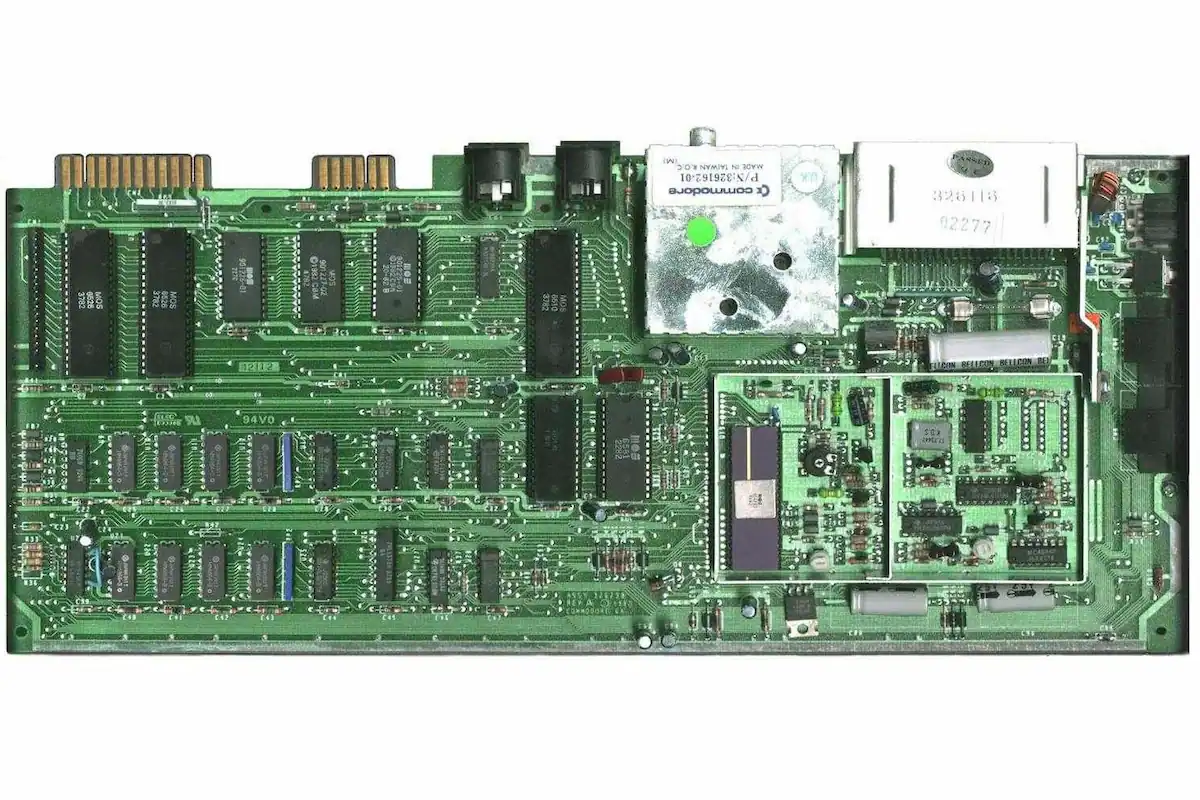
The Commodore 64 motherboard, also known as the PCB (Printed Circuit Board), is the central circuit board that connects every chip, port and component in the machine. Between 1982 and 1994, Commodore produced four main board revisions, each identified by a unique ASSY number printed on the PCB itself.
Understanding which revision is inside a C64 matters to collectors, repair technicians and enthusiasts. The ASSY number determines which chips are fitted, which bugs are present and how the machine behaves with certain cartridges and upgrades. Revision C (Assy 250425) is the most commonly found board and is generally considered the most reliable.
Shop on Amazon
Find Commodore hardware, games, books and accessories. Browse the full range on Amazon.
PCB Revisions: Assy 326298 to 250466
Commodore released the C64 with the Assy 326298 board in 1982 and continued refining the design over the following years. Each revision addressed known bugs, reduced the component count and improved manufacturing reliability. The revision number is stamped on the underside of the board near the cartridge port edge.
- ▶Assy 326298 (Rev A):The original 1982 board. Highest component count of all revisions. Fitted with the earliest SID 6581 chips and the first VIC-II variants. Often found in very early breadbin C64 units.
- ▶Assy 250407 (Rev B):First revision of the original board. Introduced minor circuit improvements and some component consolidation. Still a large board with many discrete components.
- ▶Assy 250425 (Rev C):The most commonly found C64 board. Component layout optimised, fewer solder points, improved reliability over Rev A and B. This is the revision most repair guides are written for.
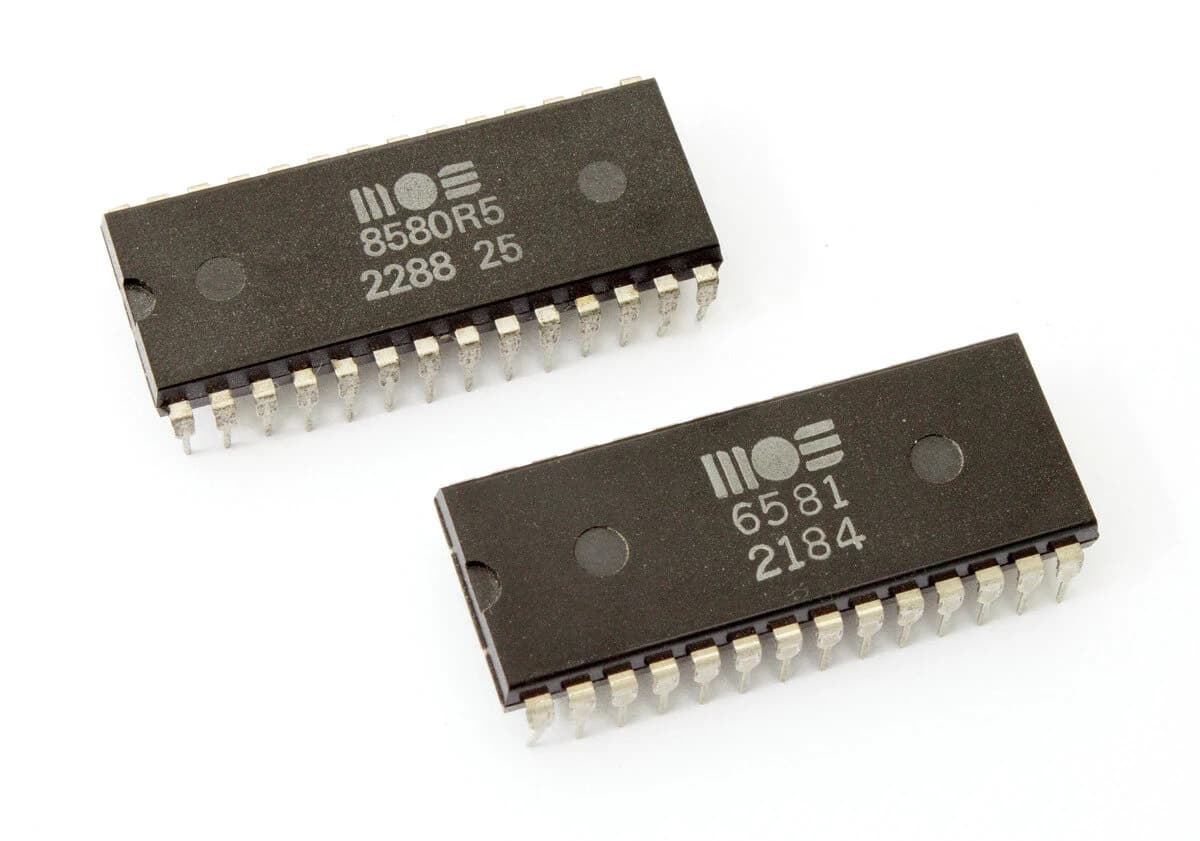
- ▶Assy 250466 (Rev D):Later revision, often found in C64C cases. Further reduced component count. Some boards use the SID 8580 instead of the 6581, which has different filter characteristics.
PLA Chip Revisions
The PLA (Programmable Logic Array) chip controls the address decoding and memory map for the entire system. Two main versions exist: the 906114-01 (original) and the 251715-01 (later, with bug fixes). The PLA is one of the most common failure points in aging C64 machines. Modern solid-state replacements are widely available and are a recommended upgrade for any restored machine.
Chips on the C64 Motherboard
Six main chips define the Commodore 64 as a machine. Each has a specific role, and understanding what they do explains both the capabilities and the limitations of the hardware.
Processor
| Chip | MOS Technology 6510 |
| Type | 8-bit CPU |
| Clock | 0.985 MHz (PAL) / 1.023 MHz (NTSC) |
| Feature | Built-in 6-bit I/O port for memory banking |
Video
| Chip | MOS Technology VIC-II |
| Resolution | 320x200 pixels |
| Colours | 16 fixed colours |
| Sprites | 8 hardware sprites |
Sound
| Chip | MOS Technology SID 6581 / 8580 |
| Voices | 3 independent channels |
| Waveforms | Triangle, sawtooth, pulse, noise |
| Features | Programmable filter, ring modulation, sync |
Interface (x2)
| Chip | MOS Technology CIA 6526 / 8521 |
| Function | Keyboard, joystick, serial, timers |
| Count | Two CIA chips per board |
| Ports | User port, datasette, IEC bus |
Logic
| Chip | PLA 906114-01 / 251715-01 |
| Function | Address decoding and memory map |
| Revisions | 906114-01 original, 251715-01 with fixes |
| Note | Common failure point in older machines |
Memory
| RAM | 64 KB SRAM |
| ROM | BASIC 2.0 + KERNAL (16 KB each) |
| Addressing | 64 KB flat address space |
| Banking | Controlled via 6510 I/O port |
Modern C64 Motherboards: FPGA and Clone Boards
For collectors and builders who want a reliable, modern-component C64 inside an original case, several drop-in replacement boards are available. Each takes a different approach to recreating the original hardware.
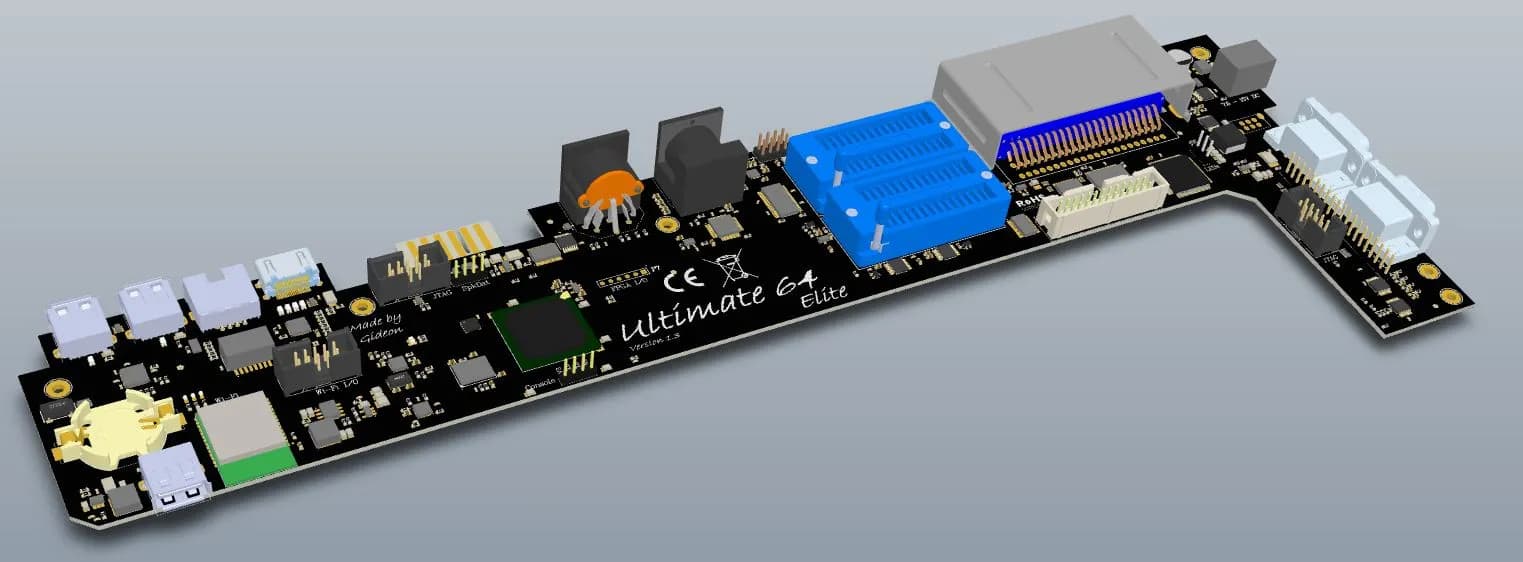
- ▶Ultimate 64 EliteFPGA-based replacement that fits inside an original C64 case. The entire C64 hardware is emulated in a single programmable chip. Supports HDMI output, USB peripherals, dual SID and cartridge emulation.
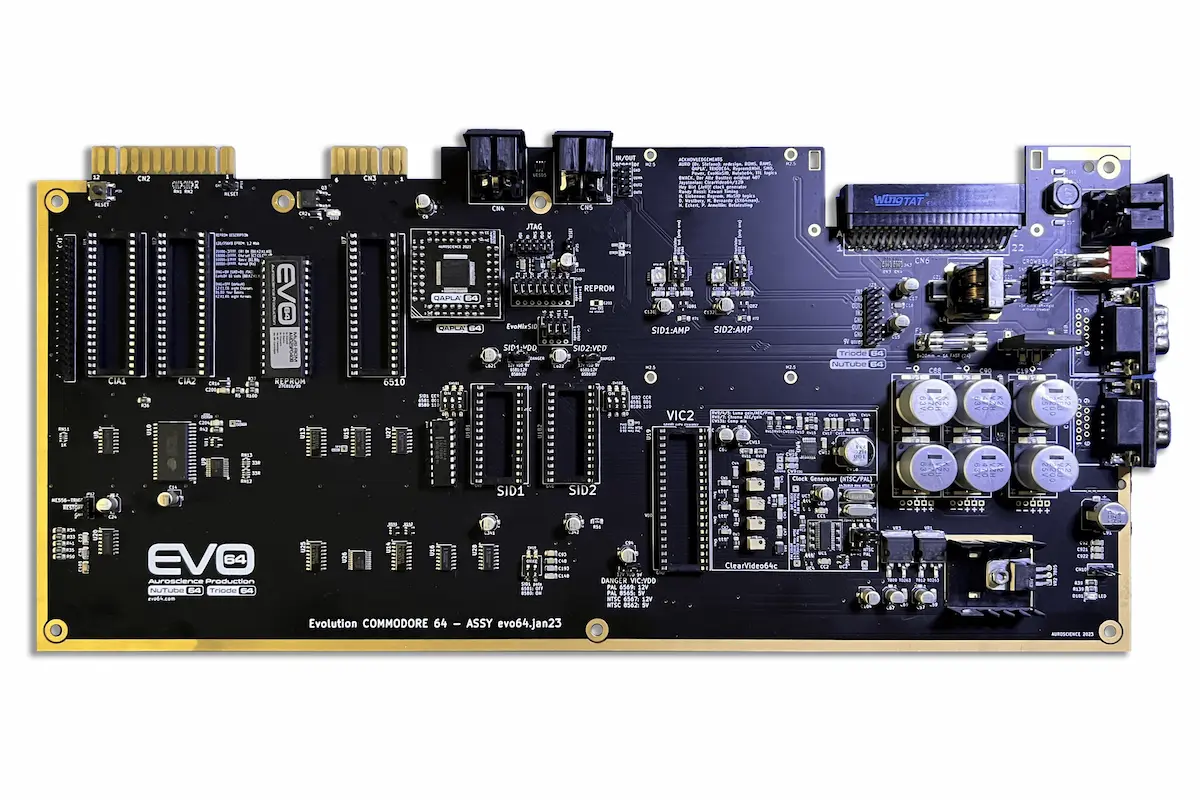
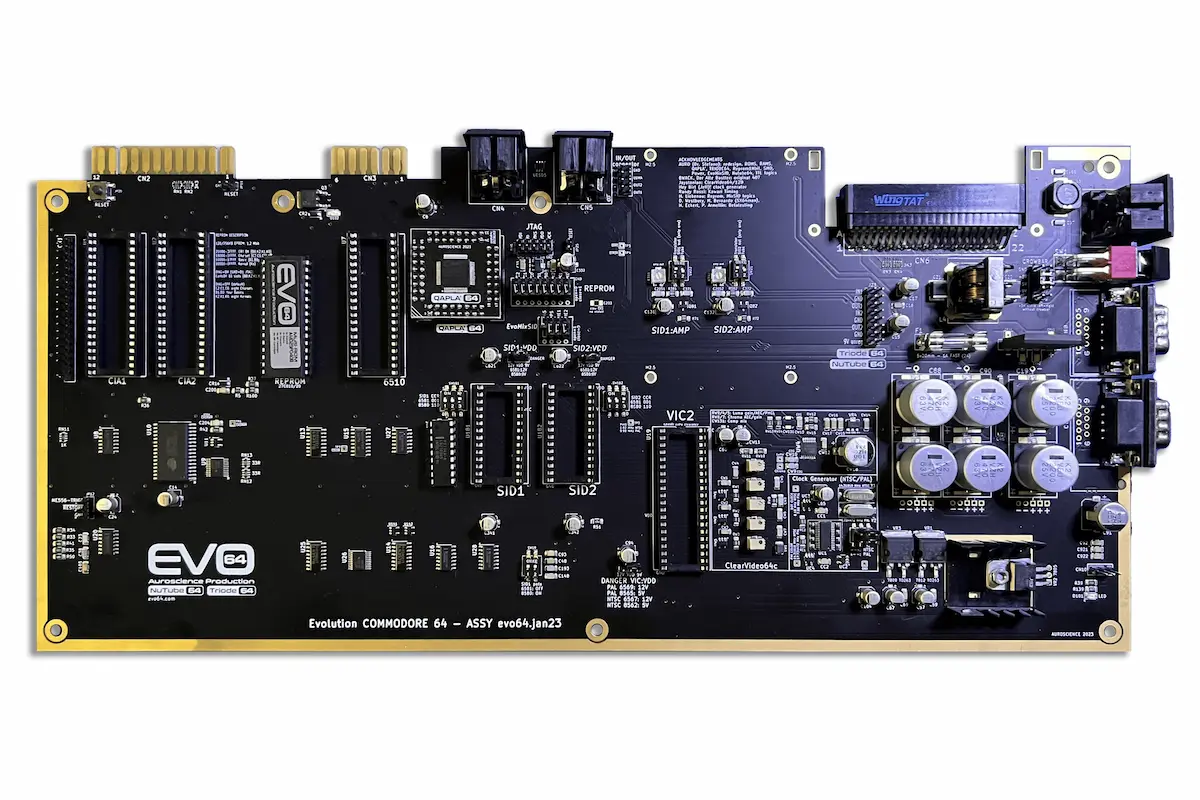
- ▶EVO64A from-scratch C64 clone built with modern components. Fully compatible with original C64 cartridges, peripherals and the keyboard matrix. Designed for builders who want a PCB made entirely from new parts.
- ▶C64 Reloaded MK2Designed for longevity, using modern through-hole components in an original-style layout. Accepts real SID chips. Fits original C64 cases. Popular with collectors who want the authentic chip sound.
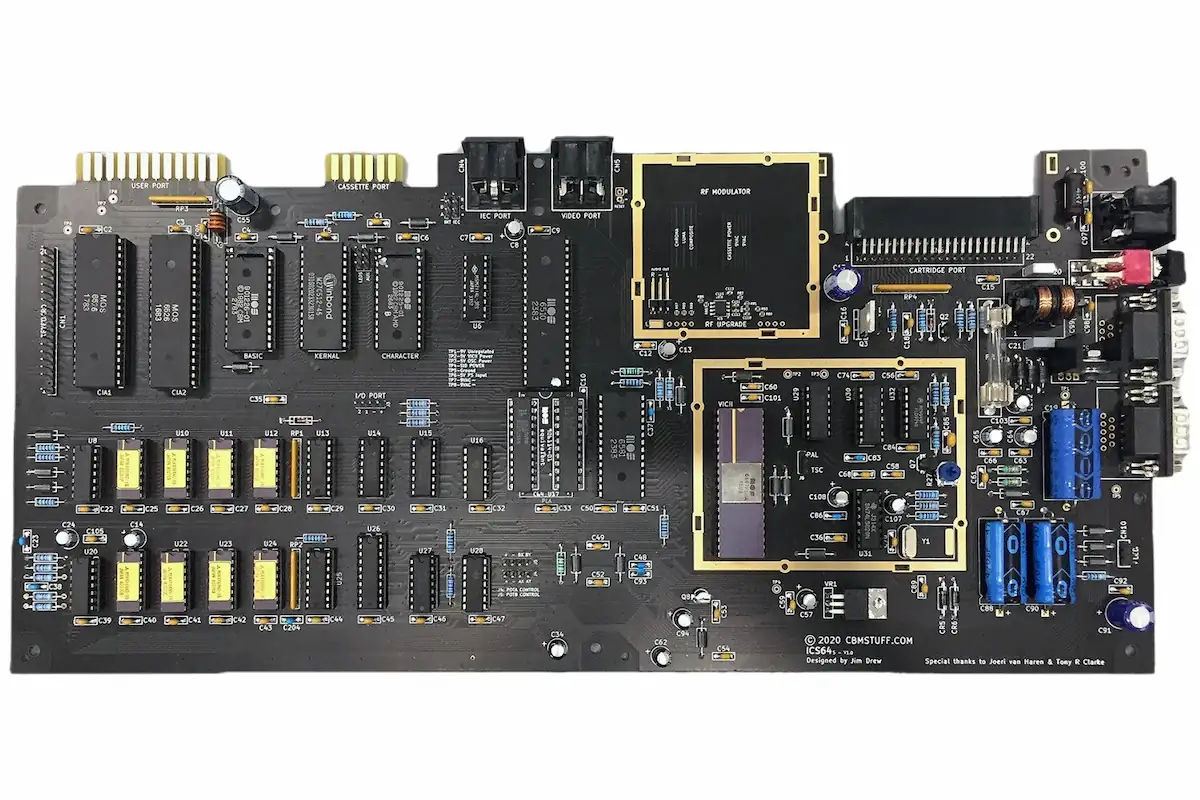
- ▶ICS64S SixtycloneA faithful recreation of the original C64 PCB using modern components, closely matching the original board layout. Compatible with original chips and peripherals.
Building a C64 from Scratch with the EVO64
Perifractic (Christian Simpson) built a fully working Commodore 64 using 100% modern components, with the EVO64 as its core. The result is a machine that looks and behaves exactly like the original but uses no legacy parts. The build demonstrates how far modern reproduction boards have come.
**** FREQUENTLY ASKED QUESTIONS ****
READY.
Explore Modern C64 Hardware
From FPGA replacement boards to software emulators, discover all the ways to run and experience the Commodore 64 on modern hardware.
Browse Emulators▶