C64 DTV
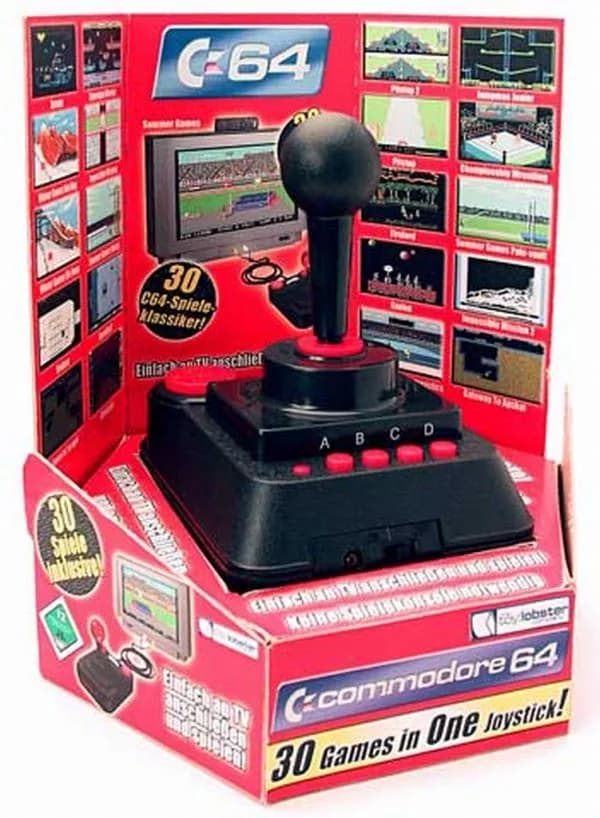
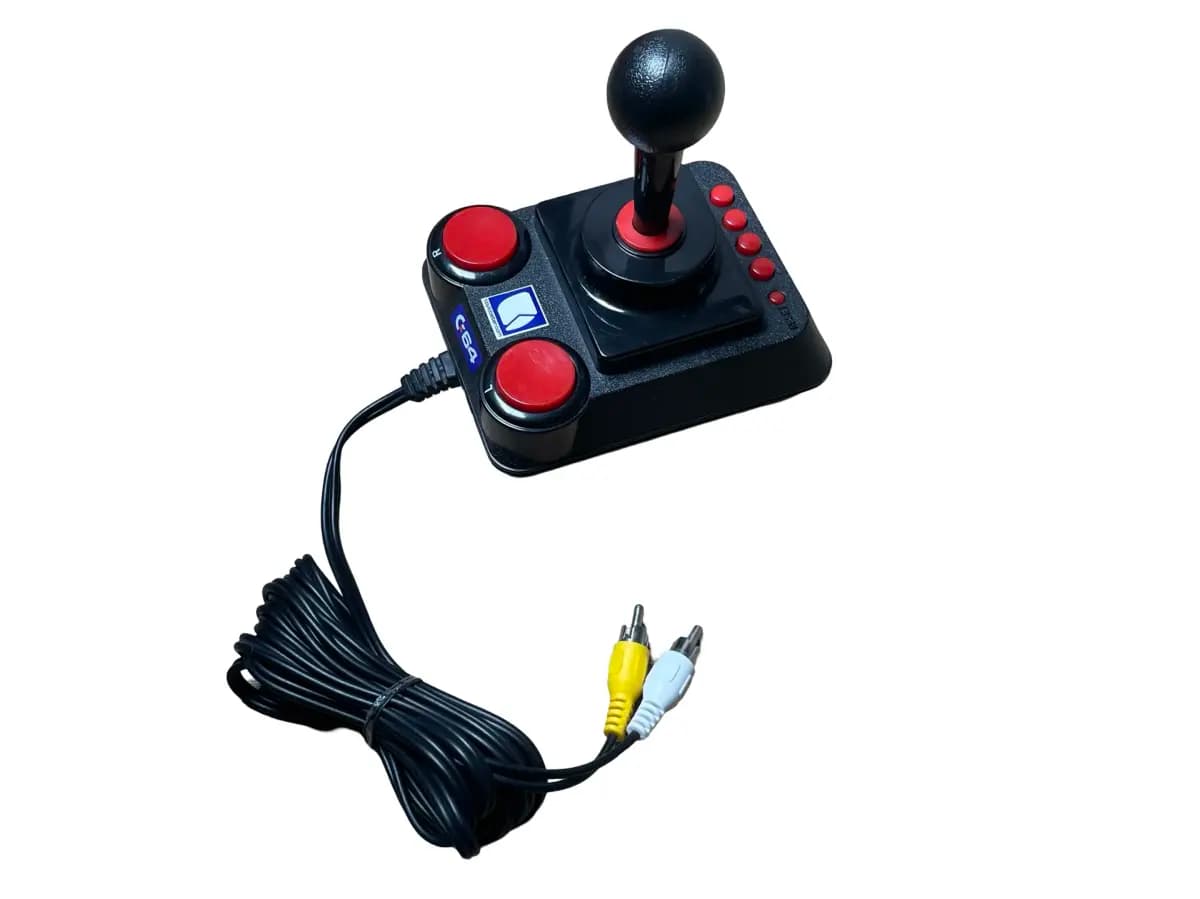
The complete Commodore 64 built into a joystick, with 30 built-in games
C64 DTV: the complete Commodore 64 in a joystick
The C64 DTV is a full Commodore 64 computer built into a joystick-shaped controller. Plug it into a TV, press the button and you are playing classic C64 games within seconds.
Released in 2004 and designed by chip engineer Jeri Ellsworth, the C64 DTV fits the complete C64 architecture onto a single custom chip. It comes with 30 built-in C64 games from EPYX, Hewson and Image Works, including Summer Games, Uridium, Paradroid and Impossible Mission. No separate console, cartridge or disk drive is needed.
The device was originally sold in toy shops as a budget gaming product. Most buyers had no idea they were taking home a real, fully functional Commodore 64. Today it is a collector's item and a remarkable piece of C64 history.
Shop on Amazon
Find Commodore hardware, games, books and accessories. Browse the full range on Amazon.
Designed by Jeri Ellsworth
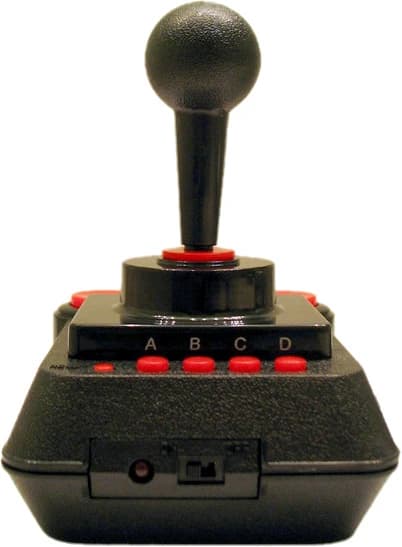
Jeri Ellsworth is a self-taught chip designer who, in 2004, achieved something that surprised the entire hardware community: she squeezed the complete Commodore 64 onto a single custom Atmel ASIC running at 32 MHz. The result was the C64 DTV, a device that contained a fully compatible C64 inside a joystick.
The achievement was widely covered in tech media at the time. Ellsworth had no formal engineering degree, yet she designed a chip that outperformed what most companies with full engineering teams would attempt. The C64 DTV proved that the entire C64 architecture, one of the most elegantly designed home computers ever built, could fit on a chip costing just a few dollars.
The DTV was produced by Mammoth Toys for the North American market (NTSC, DTV1) and by a European distributor for the PAL market (DTV2 and DTV3). The PAL versions came with upgraded hardware and are the versions most sought after by C64 history collectors today.
C64 DTV in pictures
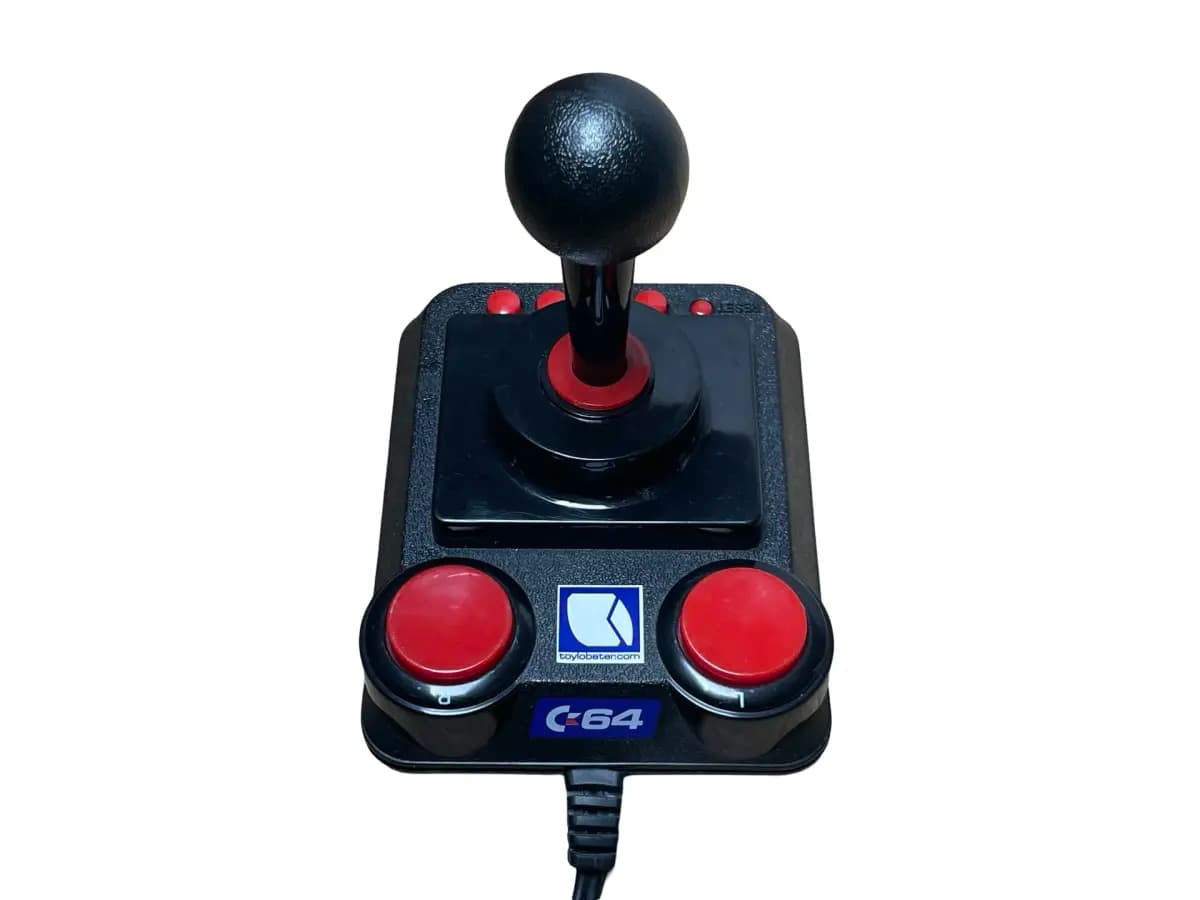
The joystick, PAL and NTSC versions, the PCB and the single-chip design inside.
DTV1, DTV2 and DTV3
The C64 DTV was released in three versions, each targeting a different market and improving on the previous one.
The DTV1 was the original North American release (NTSC) with 128 KB of RAM. The DTV2 followed for the European PAL market, with 2 MB of RAM and Flash storage instead of ROM, making it more capable and much more attractive to the modding community. The DTV3 was a revised version with improved software compatibility.
The DTV2 and DTV3 are the versions most frequently found in Europe and most valued by collectors, partly because of the larger RAM and partly because the PAL video output works better with European televisions.
| Version | Region | RAM | Storage |
|---|---|---|---|
| DTV1 | NTSC (North America) | 128 KB | 2 MB ROM |
| DTV2 | PAL (Europe) | 2 MB | 2 MB Flash |
| DTV3 | PAL (Europe) | 2 MB | 2 MB Flash |
30 built-in games
The C64 DTV comes loaded with 30 classic C64 games from three publishers. All titles run directly from the built-in memory, with no need for disks, cassettes or cartridges. The game library covers some of the most celebrated C64 games.
The modding community
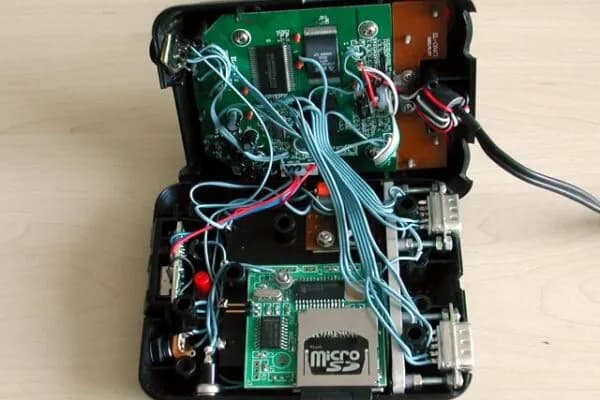
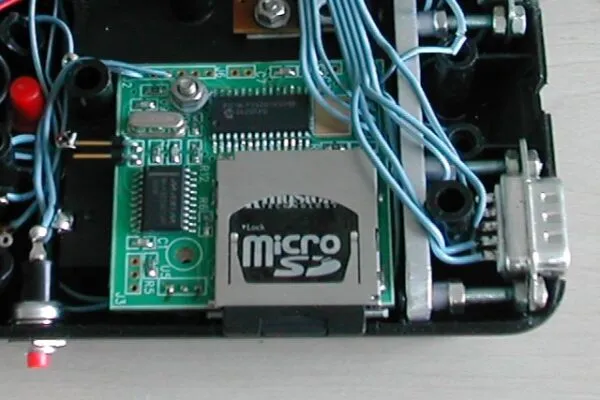
Shortly after release, hardware enthusiasts discovered that the C64 DTV could be modified to become a full standalone C64. The DTV2 in particular, with its 2 MB of RAM and Flash storage, proved ideal for hardware modifications.
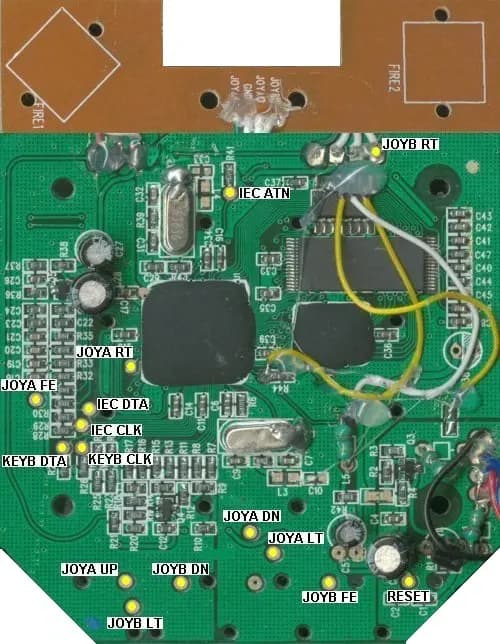
The most common modification adds a PS/2 keyboard connector and an IEC serial port, allowing the DTV to connect to a real 1541 disk drive or an SD2IEC adapter. This transforms the joystick into a keyboard-equipped computer that can run a much wider range of C64 software.
Other popular mods include adding extra RAM, replacing the composite output with an S-Video connection for a sharper picture, and installing custom firmware with expanded game libraries. The modding scene produced detailed guides and circuit diagrams that are still available online today. The 1541 Ultimate II+ cartridge, released later by Gideon Zweijtzer, further expanded the possibilities for DTV modders.
C64 DTV technical specifications
| Chip | Custom Atmel ASIC (single-chip C64) |
| Clock speed | 32 MHz |
| RAM (DTV1) | 128 KB |
| RAM (DTV2 / DTV3) | 2 MB |
| Storage | 2 MB ROM (DTV1) / 2 MB Flash (DTV2/DTV3) |
| Video output | Composite (RCA) |
| Video standard | PAL (DTV2/DTV3) / NTSC (DTV1) |
| Resolution | 320x200 pixels |
| Colours | Up to 256 (enhanced mode) |
| Audio output | Mono (SID emulation, RCA) |
| Built-in joystick | Yes (8-direction, Competition Pro style) |
| Fire buttons | 3 |
| Second joystick port | DE-9 (DTV2/DTV3) |
| PS/2 keyboard | Via hardware mod only |
| Power | 4x AA batteries or USB (5V) |
| Built-in games | 30 titles |
| IEC drive port | Via hardware mod only |
| C64 software compatibility | Partial (built-in games fully compatible) |
| Designer | Jeri Ellsworth |
| Released | 2004 |
C64 DTV in action
California Games running on the C64 DTV, one of the 30 built-in titles from EPYX.
A full C64 on a single chip
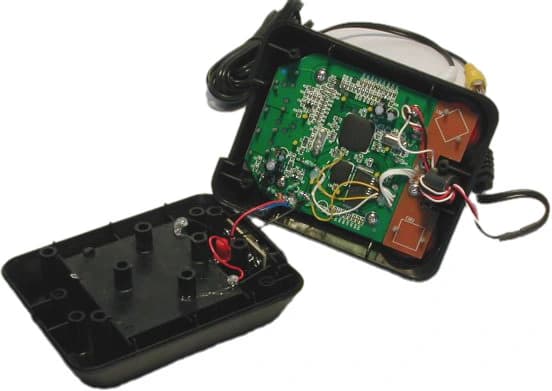
Opening the C64 DTV reveals the engineering achievement at its core: a single Atmel ASIC that contains the complete C64 architecture. The 6510 CPU, the VIC-II graphics chip, the SID chip and the supporting logic are all integrated into one programmable component.
The PCB is minimal. Most of the space is taken up by the joystick mechanism itself. The chip, a small amount of supporting circuitry, the RAM chips and the composite video encoder are the only electronics needed to run a complete Commodore 64.
For anyone interested in C64 history and hardware, the DTV PCB is one of the most instructive objects in the retro computing world. It shows how far semiconductor technology had come by 2004, and how compact the C64 really was at its core. The all emulators page covers more modern takes on this same idea.
Who is the C64 DTV for?
Collectors of C64 hardware history
The DTV is a unique piece of C64 engineering, not a replica or emulator but a real single-chip C64. For anyone building a collection of notable Commodore hardware, it is an essential item.
Fans of classic EPYX and Hewson games
If your favourite C64 memories involve Summer Games, Uridium, Paradroid or Impossible Mission, the DTV gives you those games in the most compact form possible. No setup required.
Hardware modders
The DTV2 in particular is a favourite project for retro hardware modders. Adding a keyboard port, IEC connector and extra storage turns the joystick into a working keyboard-based C64. The challenge is part of the appeal.
Anyone curious about Jeri Ellsworth
Ellsworth is one of the most interesting figures in retro computing. Owning the hardware she designed is the most direct connection you can have to her work.
**** FREQUENTLY ASKED QUESTIONS ****
READY.
Explore more C64 hardware
From software emulators to FPGA motherboards and plug-and-play consoles, there are many ways to experience the Commodore 64 today.
All C64 emulators and replicas▶