The Commodore Logo
The story behind one of the most recognisable logos in computing history
The Commodore logo design
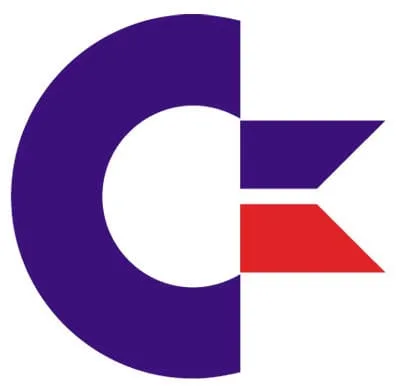
The Commodore logo is one of the most iconic symbols in computing history. That distinctive stylised shape, part sailboat and part mathematical integral sign, became synonymous with home computing itself during the 1980s.
The original design was created in the 1960s as a simple blue image of a sailboat with three sails, serving as the official logo of Commodore International when it was still a calculator manufacturer. By the time the Commodore 64 launched in 1982, the design had been refined into the four-coloured, sleeker version recognised by millions of users worldwide.
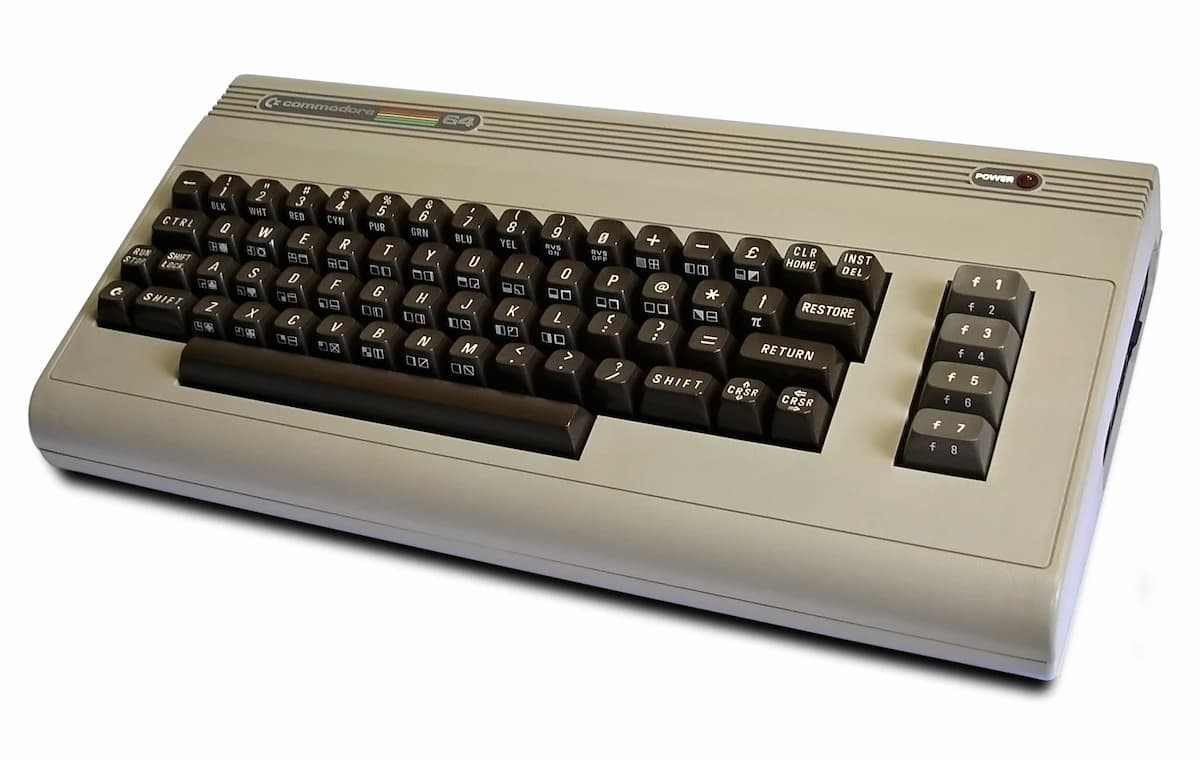
The logo adorned every Commodore product from the PET to the Amiga. On the C64, it appeared prominently on the case above the keyboard, on the packaging, in advertising and on screen at startup. For the generation that grew up with the C64, that logo means home computing.
Shop on Amazon
Find Commodore hardware, games, books and accessories. Browse the full range on Amazon.
From the integral sign to the sailboat
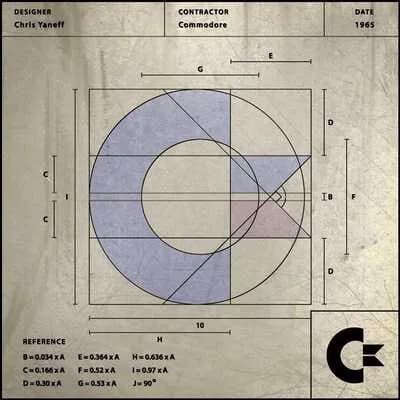
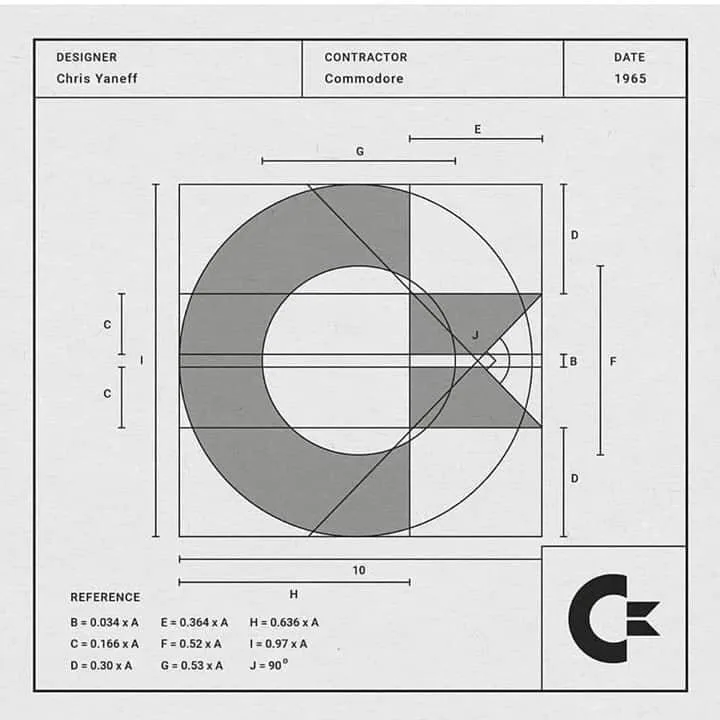
The shape of the Commodore logo has its roots in the mathematical integral sign. Canadian graphic designer Chris Yaneff took that elongated S-curve and rotated it, stylising it into something that could simultaneously suggest a sailing vessel and a bold typographic mark. The result was a shape that felt both technical and adventurous.
The original 1960s version was a simpler design with three sail sections and a more literal boat shape. Over the following two decades it was gradually refined, becoming more abstract and geometric while retaining the essential sailboat reading. By the time of the Commodore 64, the design had reached its most refined form: four coloured sections, clean proportions and the word Commodore below in a typeface that matched the boldness of the mark.
Chris Yaneff and the meaning behind the mark
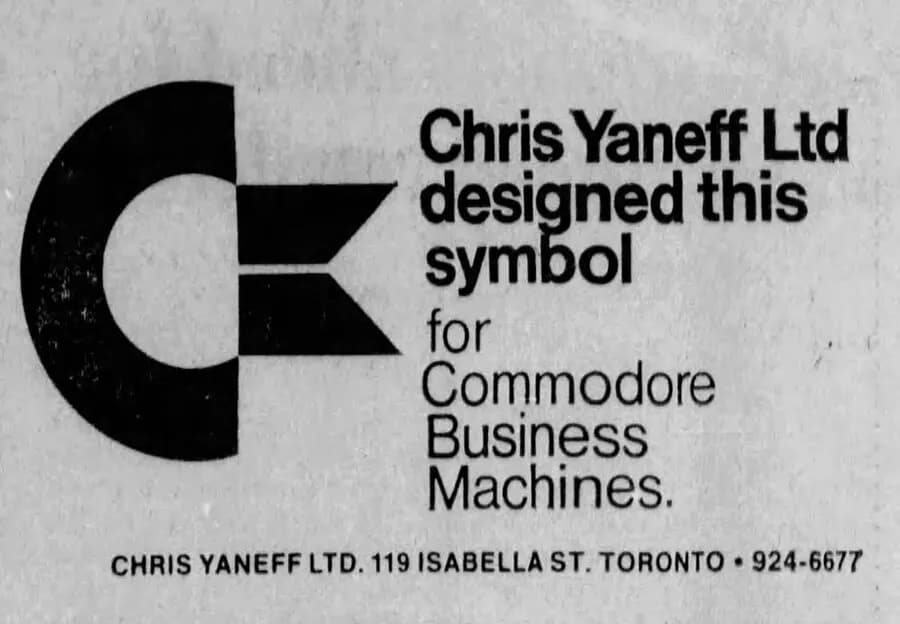
Chris Yaneff was a Toronto-based graphic designer who created the Commodore logo in the 1960s. His design captured the forward-looking spirit of the company in a single shape. The flowing, asymmetric form suggested movement and progress, while the sailboat reading connected directly to the Commodore name, which is a naval officer rank.
For the Commodore 64, graphic designer Roger B. Kennedy applied the logo to create a fresh identity for the machine. Kennedy's work gave the C64 a visual character that distinguished it from earlier models. The sailboat logo was chosen to symbolise speed, adventure and the possibility of exploring new horizons, an analogy for what the C64 offered home users in 1982.
The name Commodore itself was chosen by founder Jack Tramiel for its associations with authority and command. Tramiel reportedly considered names like Admiral and General before settling on Commodore. The naval theme running through both the name and the logo gave the brand a coherent identity that translated across cultures and markets.
A cultural icon that outlasted the company
When Commodore went bankrupt in 1994, the rights to the name and logo entered a long and complicated journey through various owners. Multiple companies have attempted to revive the brand over the decades, with varying degrees of success. The full story of those ownership transfers is covered on the Commodore trademark page.
But the original Yaneff logo has endured as a cultural icon regardless of corporate history. It is printed on t-shirts, tattooed on arms, etched on custom keyboard cases and displayed proudly by retrocomputing enthusiasts worldwide. No amount of trademark litigation has diminished its meaning to the community.
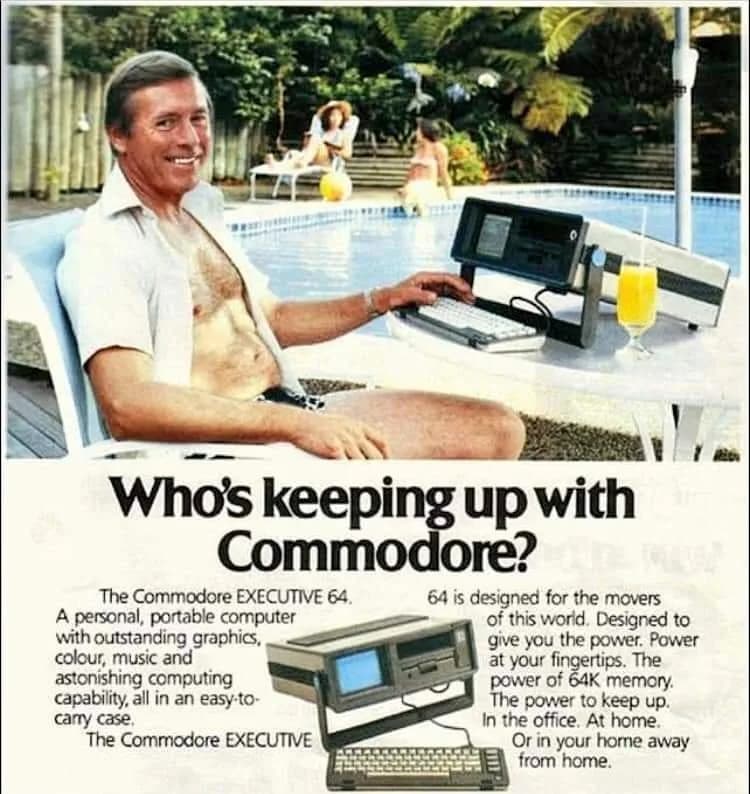
The logo appeared in every form of Commodore advertising throughout the 1980s. Television commercials, magazine spreads and point-of-sale material all carried the sailboat mark. See how the logo featured in the Commodore commercials.
Full Commodore history ▶The logo's place in design history
From a design perspective, the Commodore logo is a remarkably successful piece of work. It solves a difficult problem: how to create a mark that works at every scale, from a tiny label on a keyboard key to a large billboard, while conveying both technical precision and human warmth. The mathematical origin gives it an intellectual backbone; the sailboat reading gives it emotion.
The logo evolved across the full Commodore product range, from the PET personal computer of 1977 through to the Amiga workstations of the late 1980s. Each product carried the same essential mark, creating a visual family across very different machines. That consistency is part of why the logo became so deeply embedded in the memory of a generation.
**** FREQUENTLY ASKED QUESTIONS ****
READY.
Who owns the Commodore trademark today?
After Commodore's 1994 bankruptcy, the logo and brand passed through several owners over three decades. The full history of the Commodore trademark is a story of court cases, disputed claims and eventual resolution.
Commodore Trademark History ▶